When readers search for Global Reserve, they are usually trying to answer one practical question: what is this thing and how is it put together? This article answers that structurally. We describe the components a platform of this type presents, how those components relate to each other, and what a careful reader should verify independently before drawing conclusions.
The dashboard model
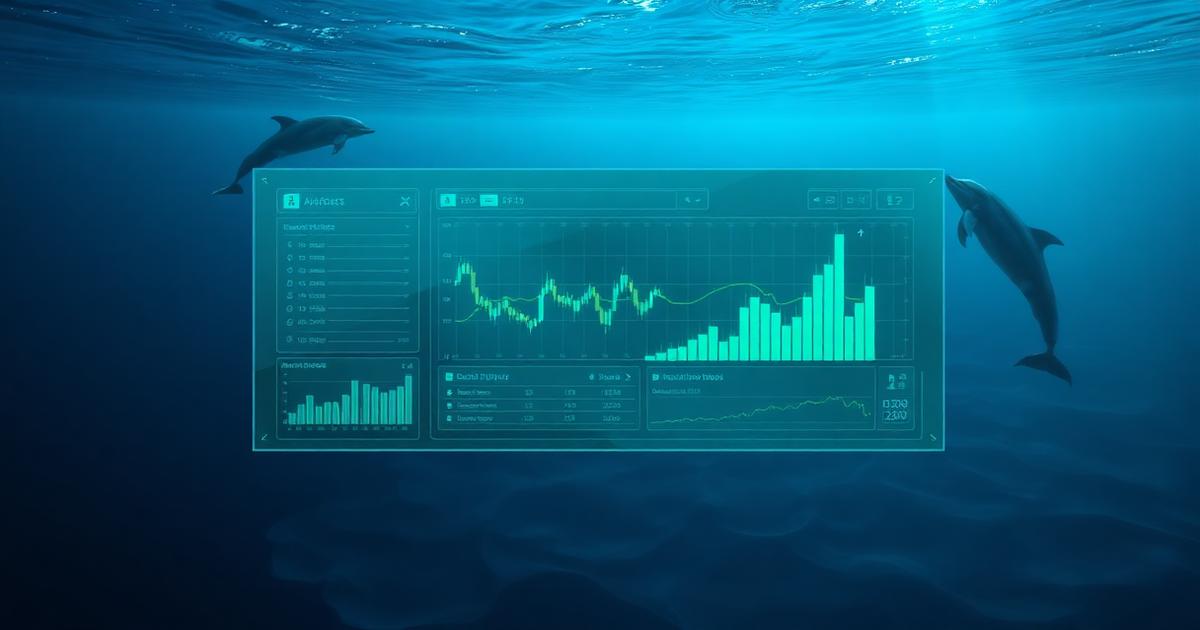
Contemporary retail platforms, Global Reserve included by category, converge on a similar dashboard model: a watchlist on one side, a chart occupying the visual centre, an order ticket adjacent to the chart, and a positions or account panel along the bottom. This convergence is not laziness. It reflects two decades of iteration on what traders actually look at while making decisions.
- Watchlist — instrument selection and quick price scanning.
- Chart canvas — timeframes, drawing tools, indicator overlays.
- Order ticket — direction, size, order type, attached stop and target.
- Positions panel — open exposure, unrealised profit and loss, margin usage.
- Account summary — equity, free margin, margin level percentage.
The quality signal is not whether these panels exist — they always do — but whether the numbers in them agree with each other instantly and whether the platform explains how each figure is derived. Ambiguity in the account summary is a genuine red flag on any platform.
Instrument categories and contract specifications
Platforms in this category typically present several instrument families: major and minor currency pairs, index products, commodities, and a selection of digital assets. What separates a well-documented platform from a poorly documented one is the contract specification table. For each instrument it should state the minimum trade size, tick value, typical spread, trading hours, and financing rates.
If you cannot find that table, you cannot calculate your cost of trading in advance. That is not a stylistic preference — it is arithmetic. A trader who does not know the tick value cannot know what a ten-point move is worth, and therefore cannot size a position responsibly. We treat specification transparency as one of the highest-weighted criteria in our Global Reserve research notes.
Charting and analysis tooling
Charting packages differ mostly at the margins. Nearly every platform offers candlestick, bar and line rendering, a standard set of moving averages, oscillators such as RSI and MACD, and basic drawing tools. The meaningful differences appear in three places: how much historical data is available, whether custom timeframes can be constructed, and whether analysis persists across devices.
- History depth determines whether you can backtest a rule visually across multiple market regimes.
- Custom timeframes matter to traders whose systems are not built on standard intervals.
- Cross-device persistence prevents the frustration of redrawing levels on a phone.
Risk controls worth verifying
Our platform research consistently returns to the risk layer, because it is the part of a platform that behaves differently when conditions are difficult. Under calm conditions, every platform looks competent. The questions below are about the other days.
- What is the stated margin close-out level, expressed as a percentage of required margin?
- Does the platform document behaviour during gaps and low-liquidity sessions?
- Are stop orders described as guaranteed, and if so, at what cost?
- Is there a documented maximum leverage per instrument class, and does it vary by client category?

Documentation quality as a proxy for operational maturity
In our methodology we treat documentation as a leading indicator. Organisations that invest in precise, versioned, plainly written documentation tend to run more disciplined operations generally. Vague documentation is rarely an isolated flaw; it usually signals that internal processes are equally loose.
For Global Reserve, as for any platform, we recommend readers assess three documents specifically: the terms of business, the order execution policy, and the complaints procedure. Together these describe the contractual relationship, the mechanics of trade handling, and what recourse exists if something goes wrong. If any of the three is missing or unreadably vague, that is meaningful information in itself.
What this research cannot tell you
Observational research has limits and we prefer to state them. We cannot verify internal execution statistics we have not seen audited. We cannot know how the platform handles an individual dispute. We cannot predict the profitability of anyone's trading, on this or any other platform. Anybody who claims otherwise about Global Reserve — positively or negatively — is asserting more than the available evidence supports.
What we can do is give readers a structured way of looking, a vocabulary for what they find, and a reminder that platform choice is a small factor compared with the discipline of the person using it.
Educational content only. Global Reserve Research is independent and unaffiliated with Global Reserve or any other platform, offers no trading services, and does not provide financial advice.
Continue reading
What Is a Trading Platform? A Plain-English Guide for New Traders
A beginner-friendly explanation of what a trading platform actually does, how order routing works, and which features matter when you study platforms such as Global Reserve.
Risk Management Fundamentals: Position Sizing, Stops and Survival
Why risk management, not prediction, determines who stays in the market. Position sizing formulas, stop placement logic and the mathematics of drawdown recovery.
Reading Candlestick Charts Without the Mythology
What a candlestick actually encodes, which patterns have observable meaning, why timeframe changes everything, and how to avoid the most common chart-reading errors.